
May 20th to 22th 2026
International Conference on Media, Arts and Interaction. Intermediartes mission is to promote the intersection between the arts and technologies through a series of interdisciplinary activities. This Conference aims to be an interface and a space for dialog and discussion, where the different overlaps of media, arts and interaction awaken new creative approaches in the various fields, bringing together academia, artists and the surrounding community. The focus of Intermediartes is to boost new learning by complementing the training of all those involved, but also to encourage artistic and scientific dissemination.
Download the Program in PDF Download the Intermediartes Session program in PDFThe 8th edition of Intermediartes will take place between May 20 and 22, with the theme [x]Human.
It has been said that we have entered an era of unprecedented advancements in development, in that of artificial intelligence, the network of things, physical, digital, quantic, and also of bodies, brains, identities, thoughts, actions, and of the post-human and post-digital philosophy, where postulates about, e.g., Human+, the Singularity, the Cyborg, are already things of the past, where what it means to be human has evolved into new interpretations and proposed interpretations. Although there is some consensus on what was and is being human, the truth is that, if we are truly objective, we still don't know, so we can only speculate about what it will be. It seems, however, that to be human is to be privileged and from other world, let's say, since it has generated-generates-will generate zeuses, pandoras, frankensteins, echidnas, マインダー, minotaurs, phoenixes, dragos, prometheuses, osirises, 上帝, damrus, also hals, nexuses-6, perhaps already -1096, stellarcs, manns, harbissons, concrete corporea, metaphysical ideals, goertzelian brains, vita-morean primos, kurzweilian singularities, the atlas, cl1, crispr-, crio-, transistors, transcribers, lucy in the sky with diamonds, dolly, and also electric sheep; which celebrates the animate and the inanimate, the known and the unknown, which declares that, finally, it has developed an intelligence, which it says is artificial, already better-than-himself and soon better-than-everyone-at-the-same-time. Around 1.5 million years ago, according to current consensus, “the relationship between biology and technology became clearly bidirectional: our biological capabilities drove technological progress, while technology, in turn, shaped essential aspects of our own evolution” (Medrano, 2025). We even hypothesize, and suspect, that the human has a rib of the machine, ancestral. Still: "No es que la carne supere al metal, sino que la evolución funciona de una manera muy distinta a la ingeniería" (Javier Sampedro, 2025) Intermediartes 2026 challenges to rethink what it means to be human, in an achronological way, which can raise hypotheses about what will be, but also about what was, and is. In this context, x refers to unknown, extended, unconfined, [independent] variable, physical, metaphysical, inorganic, biological, natural, synthetic, analog, digital, perhaps not "or", but rather "and", with all the digits, multipliable and not, i.e., 1, 2, 3, 4, 5, 6, 7, 8, 9, 0… Why not, then, imagine [x]Human as [future] systemic blastemas, but not only of primordial bioparticles, but also particles of other, also primordial, e.g., titanium, photons, from whose [re]generation potential beings may emerge: wolverines [perhaps again], icaruses—finally, or x-beings. And other forms and other conditions, recognizable or not, natural, social, synthetic; and other states, e.g., liquid, gaseous, fourth, photonic; why not x-rays or combustion? But always ethical and upright!
Intermediartes therefore invites academics, researchers, artists and professionals to submit theoretical, practical or experimental research articles in the form of papers, and/or artworks and performances that should explore, but are not limited to, the following topics:
Chairs
Bruno Pereira (ESMAE); Horácio Marques (ESMAD); Luís Leite (ESMAD); Rui Rodrigues (ESMAD)
Team
Hugo Mesquita (ESMAD); Pedro Santos (ESMAE)
Ana Carvalho - Universidade da Maia André Baltazar - CITAR / UCP, Ana Carvalho - Universidade da Maia, Carlos Caires - University of Saint Joseph, Dimitris Andrikopoulos - CESEM/ESMAE/P.PORTO, Filipe Lopes - CIPEM/INET-md/ESS/P.PORTO, Francisca Rocha Gonçalves - INESC-TEC, Gilberto Bernardes - INESC-TEC/FEUP, José Raimundo - ID+/Universidade Lusófona, Marco Conceição - CESEM/ESMAE/P.PORTO, Maria Manuela Lopes - ESE/P.PORTO, Miguel Carvalhais - i2ADS/FBAUP, Pedro Amado - i2ADS/FBAUP, Pedro Cardoso - i2ADS/FBAUP, Ricardo Melo - Fraunhover Portugal (AICOS), Rodrigo Carvalho - ID+/FBAUP, Rui Penha - CESEM/ESMAE/P.PORTO, Rui Torres - ICNOVA/Universidade Fernando Pessoa, Tehri Martilla - ITI/LARSyS
Bruno Pereira, Horácio Marques, Laura Garrido, Luís Leite
ESMAD (Auditório Luís Soares, Blackbox); ESMAE (Teresa Macedo); Centro de Memória; Casa Antero de Quental
Workshop | Book presentation
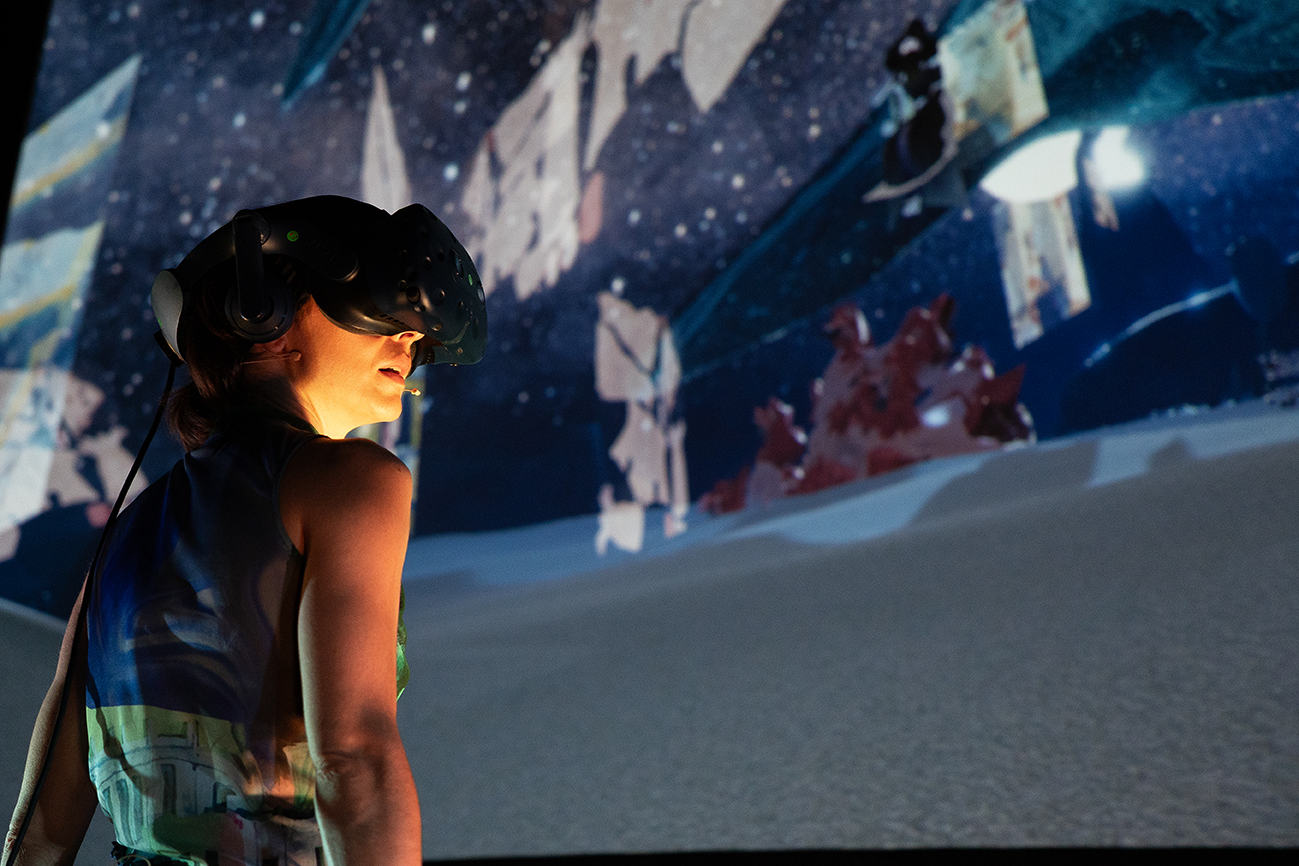
‘Prototypes of Encounter’ is a project that aims, through artistic practices, to rethink ways of organising and participating in a pluralistic society. By creating spaces for practical experimentation, residencies and performative laboratories, the project aims to materially test forms of cooperation both within and outside artistic production. Although more commonly associated with design or the digital world, the word ‘prototype’ is understood here as a potential form of experimentation, employed as a methodological tool to establish a basis for dialogue with artist collectives, individual artists and invited researchers. By making room for scheduled and spontaneous encounters, for unpredictability and the possibility of failure, the key will be to experiment and test together new vocabularies, ecologies and configurations of existing or yet-to-be-invented practices. Power relations in everyday life, and the distribution and performance of roles in the collective experience, are some starting points for questioning configurations and modes of interaction in the social sphere.
A theoretical and practical workshop, organised by the Protótipos de Encontro project in partnership with Intermediartes 2026, inviting students from ESMAD and ESMAE, as well as the local community, to explore the world of BERTIE, a virtual reality video game for theatre.
Organized by Rita Barbosa / Circular Festival
Rita Barbosa (1979, Porto) is a filmmaker and visual artist, holding a degree in Digital Arts from the Sound and Image course at UCP (2002). Her artistic practice focuses primarily on moving images, though she has also collaborated on the creation, writing and visual design of projects in the fields of theatre and performance. In her work, she seeks, through interdisciplinary approaches, to deconstruct operational processes, viewing art as an aesthetic game. Her notable works include: the short film A Hora da Estrela (yet to be released),which was part of the Cannes Film Festival’s Short Film Corner’s Focus WiP 2024; the VR video game for theatre Bertie (2024), premiered at the Teatro Municipal Rivoli (Porto), TCA (Aveiro) and gnration (Braga); the short film 2.ª Pessoa (2022), which won the Audience Award at Vienna Shorts, a Special Mention at the Glasgow Short Film Festival, the Best Documentary award at Silhouette, Best Short Film at Caminhos do Cinema Português and Porto Femme, and Best Fiction at the Arquitecturas Film Festival, and screened at various international festivals, such as Kurzfilmtage Winterthur, Uppsala, Encounters, KFFK/Kurz Köln, Minimalen, Rencontres Internationales Paris/Berlin, Sundsvall, amongst many others; the TV film Jogos de Enganos (2022), by Ukbar Filmes for the RTP series Contado por Mulheres; the performance film Amigos Imaginários (2019), presented at the Noorderzon Performing Arts Festival, PT.21, Teatro Municipal Rivoli and CCB, amongst others; and the short film À Noite Fazem-se Amigos (2016), which premiered at the Locarno Film Festival. She has produced experimental videos screened at the Cartier Foundation, Impakt and Courtisane. In theatre and performance, he has collaborated with Tiago Rodrigues on *3 Dedos Abaixo do Joelho* (2012), and with various theatre companies and artists, including the Mala Voadora company, Máquina Agradável, Maria Jorge, Lígia Soares, Miguel Castro Caldas, Sílvia Pinto Coelho, Andresa Soares, Sónia Baptista and Tiago Guedes. He has been working in advertising since 2006, having produced dozens of television campaigns. He began working in this field in collaboration with Tiago Guedes and has extensive technical and creative experience in filming, directing and coordinating teams.
infoMay 20 - 14h00 : 18h00 - Blackbox ESMAD
Applications are now open for Intermediartes Workshop
application form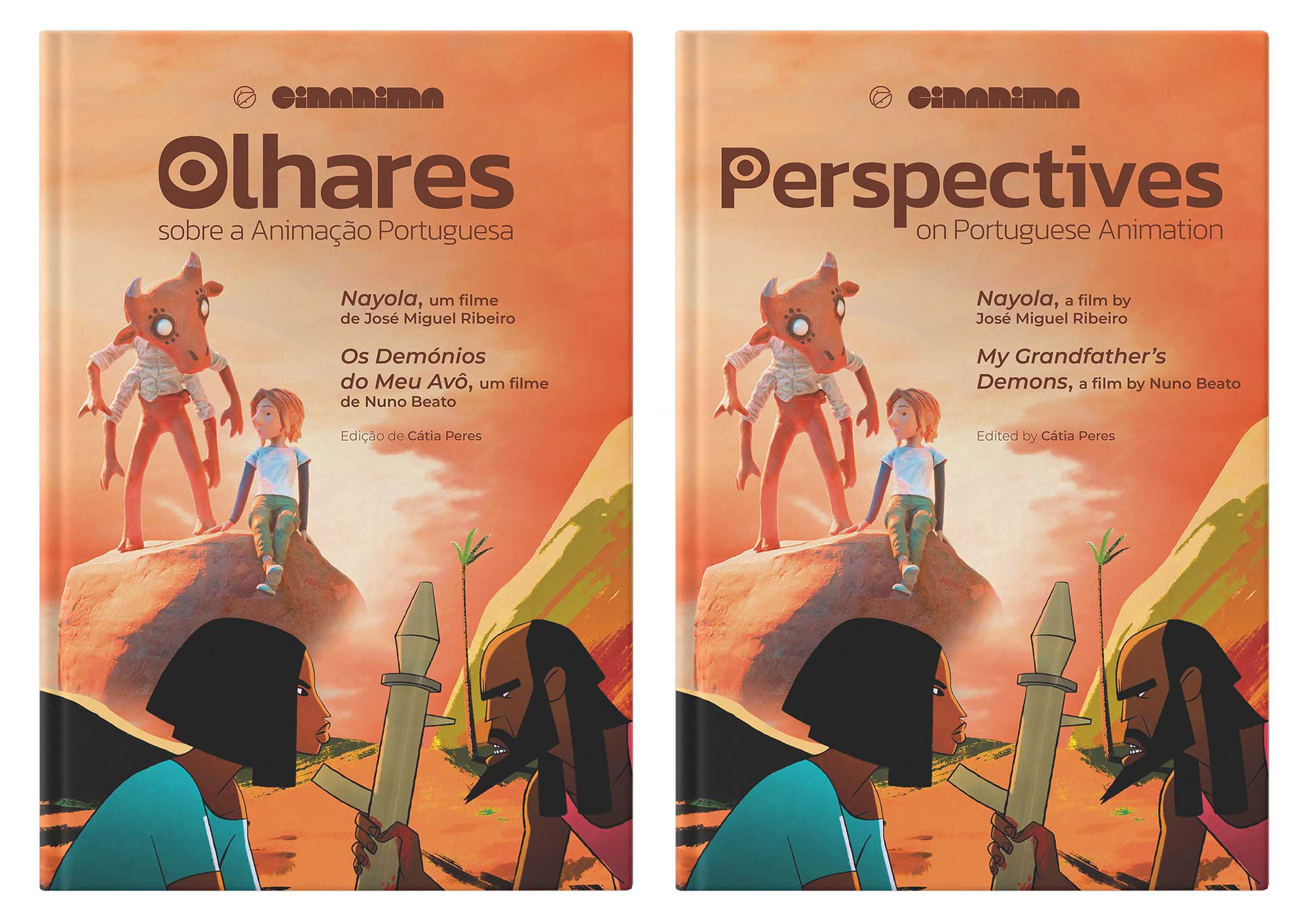
Perspectives on Portuguese Animation is an initiative of CINANIMA – International Animated Film Festival of Espinho, originally conceived and developed in 2021 by the then Artistic Director of CINANIMA, professor, researcher, and multi-award-winning animation director Pedro Serrazina. Since then, CINANIMA has continued to organise, on an annual basis, new editions of the symposium, with the additional objective of producing scholarly publications as outputs of the initiative. Following the launch of the first two editions—the first dedicated to filmmakers David Doutel and Vasco Sá, curated by Pedro Serrazina, and the second focusing on the female duo Alexandra Ramires and Laura Gonçalves, curated by Cátia Peres—two further volumes have now been published, corresponding to the 2023 and 2024 symposia. In 2023, the 3rd edition of the Perspectives on Portuguese Animation symposium was held within the framework of the 47th CINANIMA Festival, and in 2024, during the 48th Festival, the 4th edition took place. The primary aim has been to further develop a multidisciplinary analysis of works by Portuguese animation filmmakers, based on the recognition that this remains a relatively underexplored field within scientific and academic research. The first volume (2023), edited by Cátia Peres, focuses on the analysis of the feature films Nayola, by José Miguel Ribeiro, and My Grandfathers' Demons by Nuno Beato. The contributing researchers include Cátia Peres, Cynthia Levitan, Sandra Ramos, João Apolinário, Inês Rebanda Coelho, and Risa Cohen. The second volume (2024), edited by Sahra Kunz, features analytical contributions by Laura Castro, Patrícia Oliveira-Silva, and Pedro Serrazina on the work of Regina Pessoa. Based on these two years of symposium activity (2023 and 2024), and with the support of the ICA – Portuguese Institute of Cinema and Audiovisual, two bilingual scholarly publications have been produced for various academic communities in Portugal and abroad, available both in a limited print edition and in a freely accessible digital format via the CINANIMA website. The presentation of the publications will take place from May 2026 onwards at festivals, conferences, higher education institutions, and other cultural and educational organisations, targeting the general public and featuring the participation of curators and editors, as well as authors and researchers. At this presentation, alongside the editorial coordinator Cristina Novo, there will also be contributions from the researchers Inês Rebanda Coelho (3rd edition) and Laura Castro (4th edition).
With a pre-Bologna degree in Sociology from the Faculty of Arts of the University of Porto (1999) and ongoing training in areas such as digital marketing, cultural project design, digital and cultural communication, record production and marketing, statistics, institutional partnership culture, social development and territorial strategic planning, diversity and inclusion, as well as a Professional Certificate of Pedagogical Aptitude for Trainers, Cristina has been designing and developing social and cultural projects for various organisations in Portugal for over 20 years. She was also producer of the live-action documentary Imago, from the director Rui Pedro Lamy, with cinematography by António Morais, and has worked as a producer on interactive digital art projects (Mecha Studio). In 2018 she joined CINANIMA – International Animated Film Festival of Espinho, initially taking on the coordination of the Communications and Partnerships department. She currently fosters the establishment of partnerships between the festival and numerous cultural and educational institutions, coordinates educational projects, supervises internships, and acts as executive producer of critical-thinking initiatives such as masterclasses, meetings, debates, symposiums, pitching sessions and workshops. Her main role is that of project manager in CINANIMA’s education department.
Inês Rebanda Coelho has a Bachelor in Sound and Image, a master’s degree in Cinema and Audiovisual (both from EA- UCP), and a Ph.D. in Communication Sciences within Film and Television Studies (UMinho). Inês is a jury at ICA and has worked in cinema, television and audiovisual production for more than 15 years, being specialized in Production Consultancy and Executive Production. She’s a professor, researcher at CECC-UCP, the co-director of the indexed journal “Cinema & Territory” and, the coordinator and co-founder of the research work group Economics and Management in the Moving Image of AIM. Author of fantasy and Sci-Fi’s published literature.
infoMay 21 - 12h00 at Auditório Luis Soares
Intermediartes
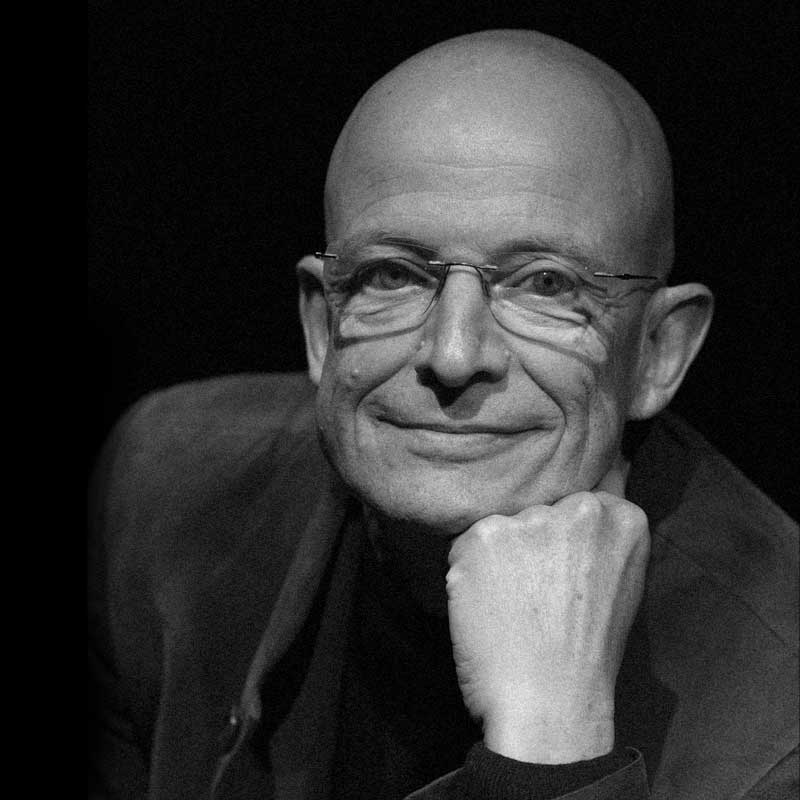
22 May 11am Teresa Macedo (ESMAE)
Recognised for the originality and diversity of his work, Miguel Azguime is a composer, performer and poet, with a catalogue comprising more than 150 pieces and an artistic practice that continually expands the boundaries between music, text, voice, stage and technology. Co-founder, with Paula Azguime, of the Miso Ensemble — a landmark group in Portuguese contemporary music — he developed the pioneering concept of New Op-Era, in which sound, word, image, body and dramaturgy are articulated within a profoundly singular intermedia language. His creations have been presented at major international festivals and institutions, affirming a career marked by poetic research, formal experimentation and the integration of real-time technological media. In 2006 he was composer-in-residence of the DAAD in Berlin, where he developed Itinerário do Sal (Salt Itinerary), a work distinguished by UNESCO in 2008. He is also a central figure in the promotion of new music in Portugal, through Miso Music Portugal, the Música Viva Festival, Miso Records, the Portuguese Music Research & Information Centre, the Sond’Ar-te Electric Ensemble and the Miso String Quartet
www.azguime.net / www.mic.pt / www.misomusic.me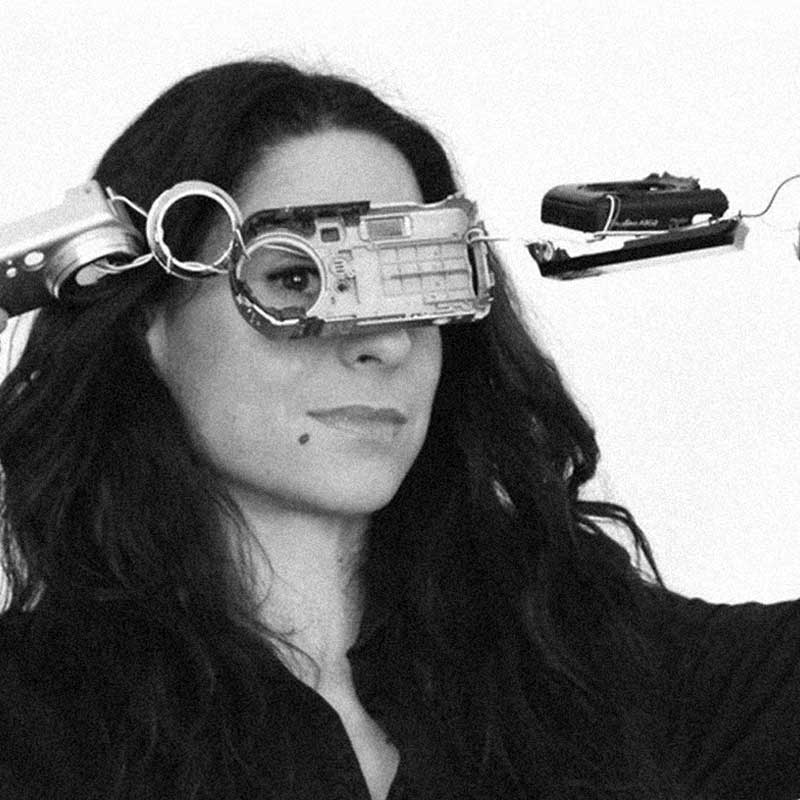
21 May 14:30am Auditorium Luís Soares (ESMAD)
Patrícia J. Reis is a Portuguese media artist and researcher based in Vienna whose practice explores human and more-than-human relationships with technology through sensory interaction and body interfaces. Her installations investigate touch, consent, and care, often inviting intimate and active participation from the audience. With the aim of subverting visuality as the dominant mode of experience in the age of AI, she works with body-based computing and haptic art to expand sensory perception. Her feminist approach draws on feminist hacking, advocating for collective practices, and more inclusive and de-colonial forms of technological production, while addressing both the representation of female roles in digital imagery and the lack of visibility of women in the technological field and the arts. Since 2012, she has been a board member of Mz* Baltazar’s Lab, the feminist hackerspace in Vienna, which organises workshops and exhibitions internationally. Since 2015, she has been teaching at the Digital Arts Department, University of Applied Arts Vienna, where she currently doing her habilitation and leads the FWF Elise Richter PEEK project “Endosensorial Interaction: Hacking the Body as the Black Box”. Reis has presented her work in numerous international exhibitions and has been awarded the Nomination S+T+ARTS Arselectronica Prize (2024) and Outstanding Artist Award in Media Art (2021, Austria).
www.patriciajreis.com / Instagram / hackingthebody.orgCreative Lab
The Hackathon InterMediArtes (HIMA) is a multidisciplinary creative laboratory that connects the arts with emerging technologies. This intensive and experimental creative space is made up of students from ESMAE's Masters in Art and Sound Technology and ESMAD's Masters in Interactive Digital Media, as well as students from other courses looking to cross disciplines and explore media arts and interaction. Every year we open a call for students from other courses, to stimulate these disciplinary crossings. This is a registration form for those students wishing to take part in this initiative, which takes place at Casa Antero de Quental, ESMAE and ESMAD's Blackbox. The projects developed at HIMA will be presented to the public on the last day of Intermediartes.
Hugo Mesquita (ESMAD); Pedro Santos (ESMAE); Bruno Pereira (ESMAE); Horácio Marques (ESMAD); Luís Leite (ESMAD); Rui Rodrigues (ESMAD)
ESMAD; ESMAE; Casa Antero de Quental
Papers
Under the theme, [x]Human, Intermediartes 2026 welcomes proposals for papers, which will be blind reviewed by a scientific committee. The paper will then be published in the Conference Proceedings (in digital format).
The Microsoft CMT service was used for managing the peer-reviewing process for this conference. This service was provided for free by Microsoft and they bore all expenses, including costs for Azure cloud services as well as for software development and support.
If you have any questions, please send an e-mail to: intermediartes@esmad.ipp.pt
ArtWorks
Intermediartes 2026 is open to proposals for artistic works, which will be considered by an artistic curatorial committee (ACC) that will curate this section of the Conference. The Artworks submitted will be analyzed and may be selected for one or more of the following exhibition modalities:
Notes:
Papers, Artworks
Papers
Article submission -> April 7th
Communicating results -> April 26th
Camera Ready Version -> May 10th
Artworks
Article submission -> April 7th
Communicating results -> May 4th
Camera Ready Version -> May 10th
